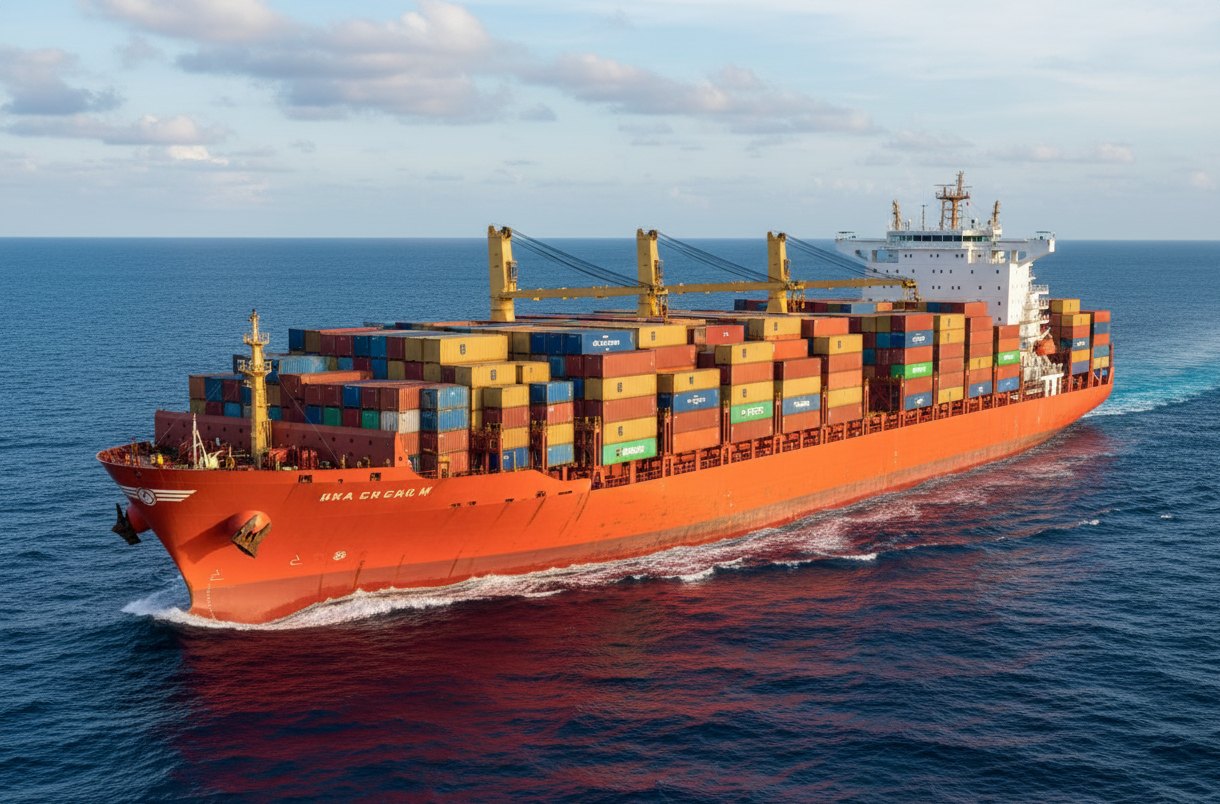
China has announced it is to open a new shipping route through the Arctic in an effort to avoid the ongoing conflict in the Middle East.
Amid ongoing attacks on vessels in the strait of Hormuz and the Red Sea, Chinese container shipping company Sea Legend has revealed it is to launch its first regular shipping service through the Arctic.
The shipping service will connect Ningbo in China to Felixstowe in the UK through the Northern Sea route across Russia’s Arctic coast, in a route being labelled as the “Ice Silk Road”.
The group claimed that the route will cut the average 40-day sailing time between the two ports in half.
Many European shipping lines have avoided this route on the grounds of worsening relations with Russia and the fears over causing ecological harm to the Arctic ecosystem.
Citing data from researchers at the University of Southampton in the UK, The Financial Times reports that the ongoing decline in sea ice is what has made the establishment of the new service possible. The researchers, the report says, determined that peak winter period ice was down 5.8 percent between 2024 and 2025 – supposedly the biggest drop on record. Although there was a slight recovery this year, it is still at the second-lowest levels on record.
Sea Legend’s transit is expected to be the first of many as China boldly embarks on its mission to carve out a new marine cargo trade route through the Arctic. At least six Chinese shipping companies are expected to make more than 50 voyages along the route this season, using container, bulk and multipurpose vessels, with the vast majority of transits running between China and Russia, according to schedules posted by the China Shipowners’ Association.
Arctic traffic on the increase
The number of ships operating in the Arctic reached a record high in 2025, according to new recent data from the Arctic Council Working Group on the Protection of the Arctic Marine Environment (PAME). The Working Group has been tracking Arctic shipping traffic trends since 2013 utilizing its Arctic Ship Traffic Data (ASTD) System.
PAME’s updated data reveals just how much Arctic shipping is increasing, how far they’re sailing, what types of ships are in the region and more.
In 2025, 1812 unique ships entered the Arctic Polar Code area, according to the research – a 40% increase from 2013 when data collection began. The term unique ships refers to each ship only counted once, although many ships enter the area multiple times each year.
Comparing 2013 to 2025, the distance sailed by ships in the Arctic Polar Code Area also increased 95%, from 6.1 million to 11.9 million nautical miles. The distance represents the aggregate sailed for each ship in nautical miles.
PAME said that the increase in shipping coincides with diminishing sea ice in the Arctic, and that the number of unique ships entering the Arctic Polar Code area is generally highest in the month of September, when Arctic sea ice is at its lowest extent. In September 2025, 1060 ships entered the Polar Code area out of the total 1812 ships that entered the entire year, amounting to 58% of traffic.